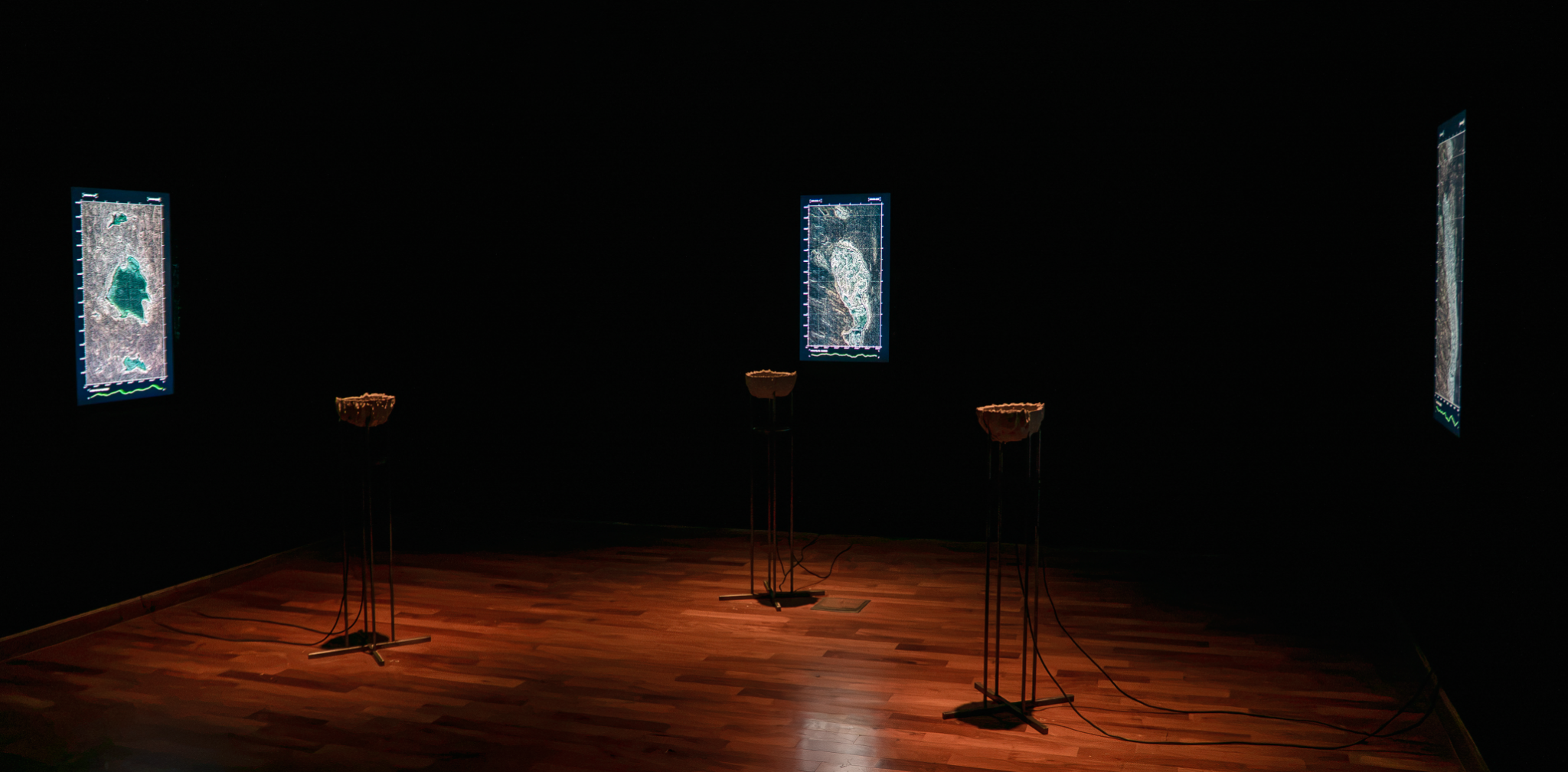
Crystallizing the Void is an installation that addresses the extractive crises affecting the high-Andean salt flats located in the territory known as the Lithium Triangle (Argentina, Bolivia, and Chile), exploring the relationships between mineral agency, contemporary technologies, and the energy transition.
The idea of technology as something immaterial, expressed through notions such as the cloud or virtual spaces, suggests an ethereal form of existence. In reality, technology has a physical presence distributed across the planet and depends on geological, mineral, and hydrological resources. The resurgence of artificial intelligence over the past decade has further intensified extractive practices, land sales, the construction of data centers, and the excessive consumption of limited resources, while technology leaders continue to dream of terraforming other planets.
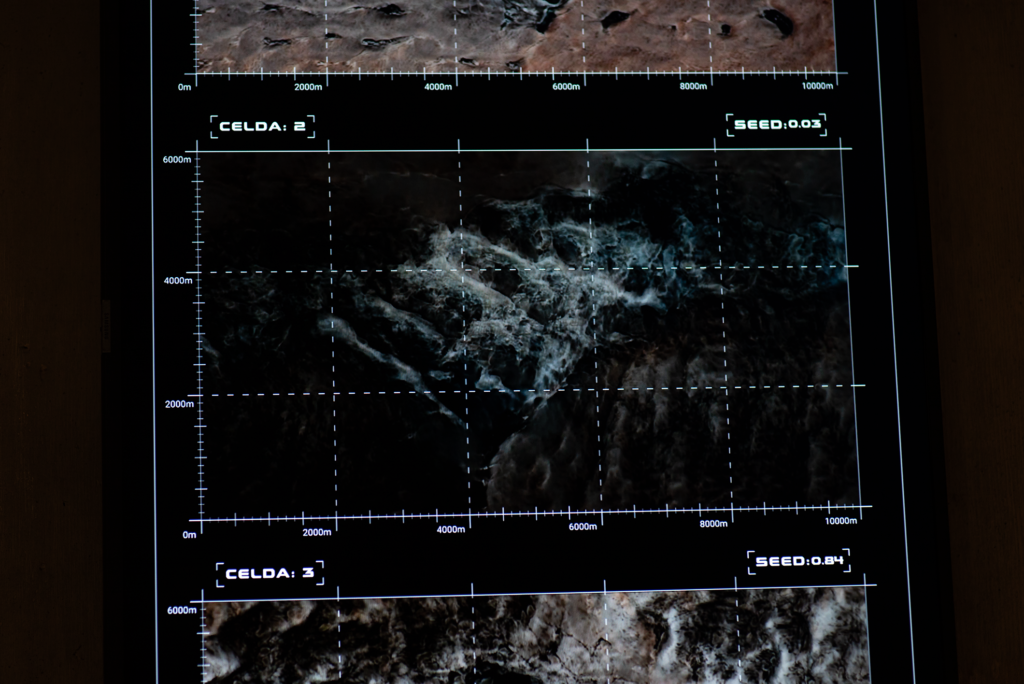
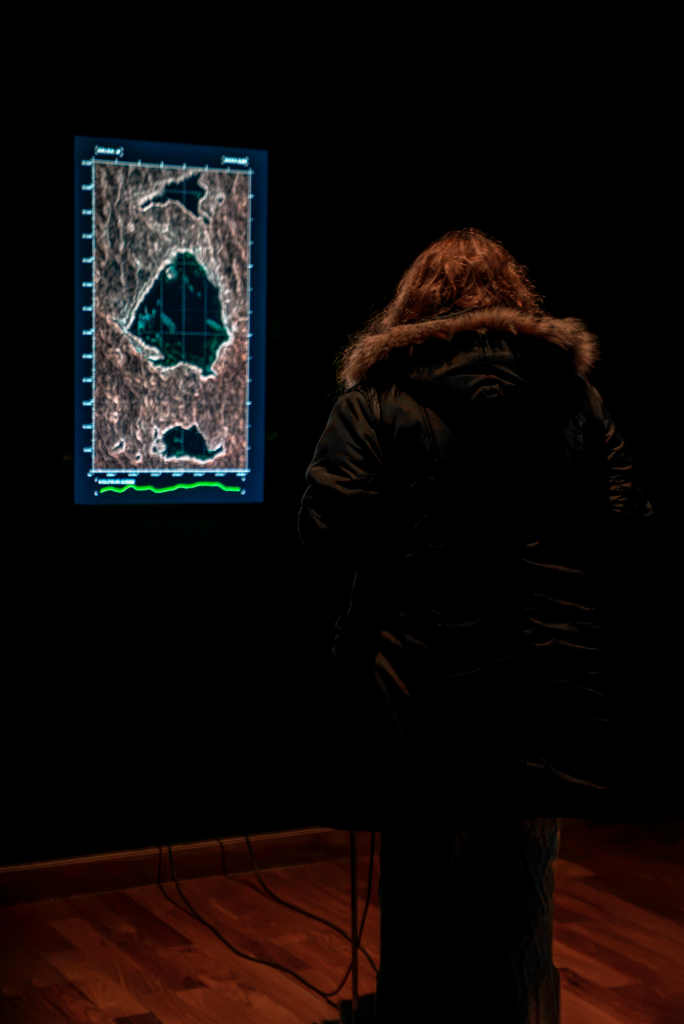
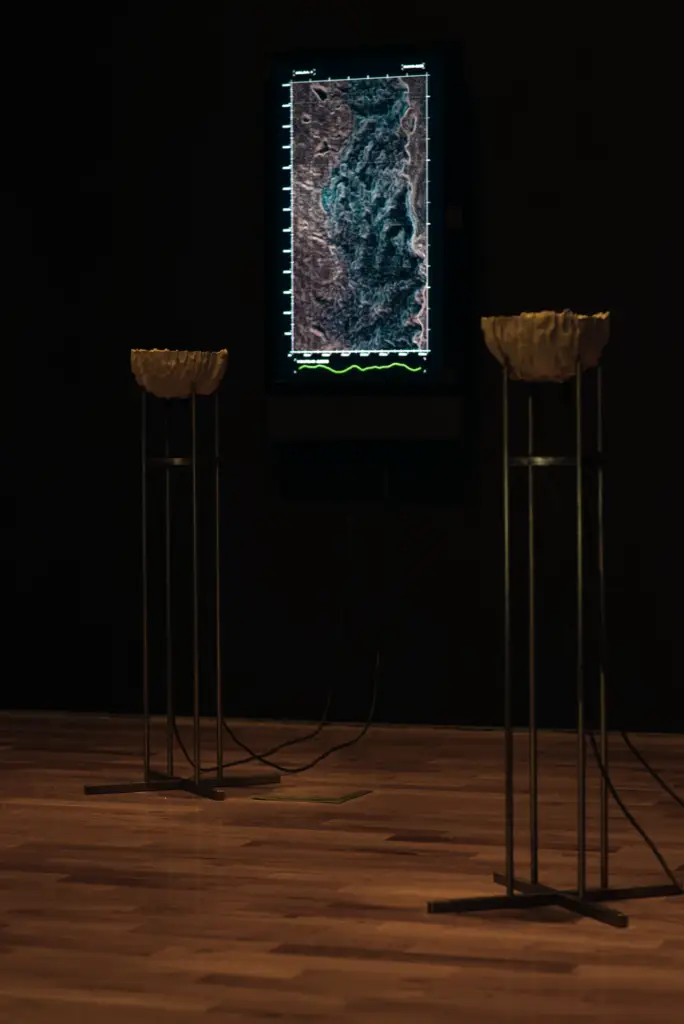
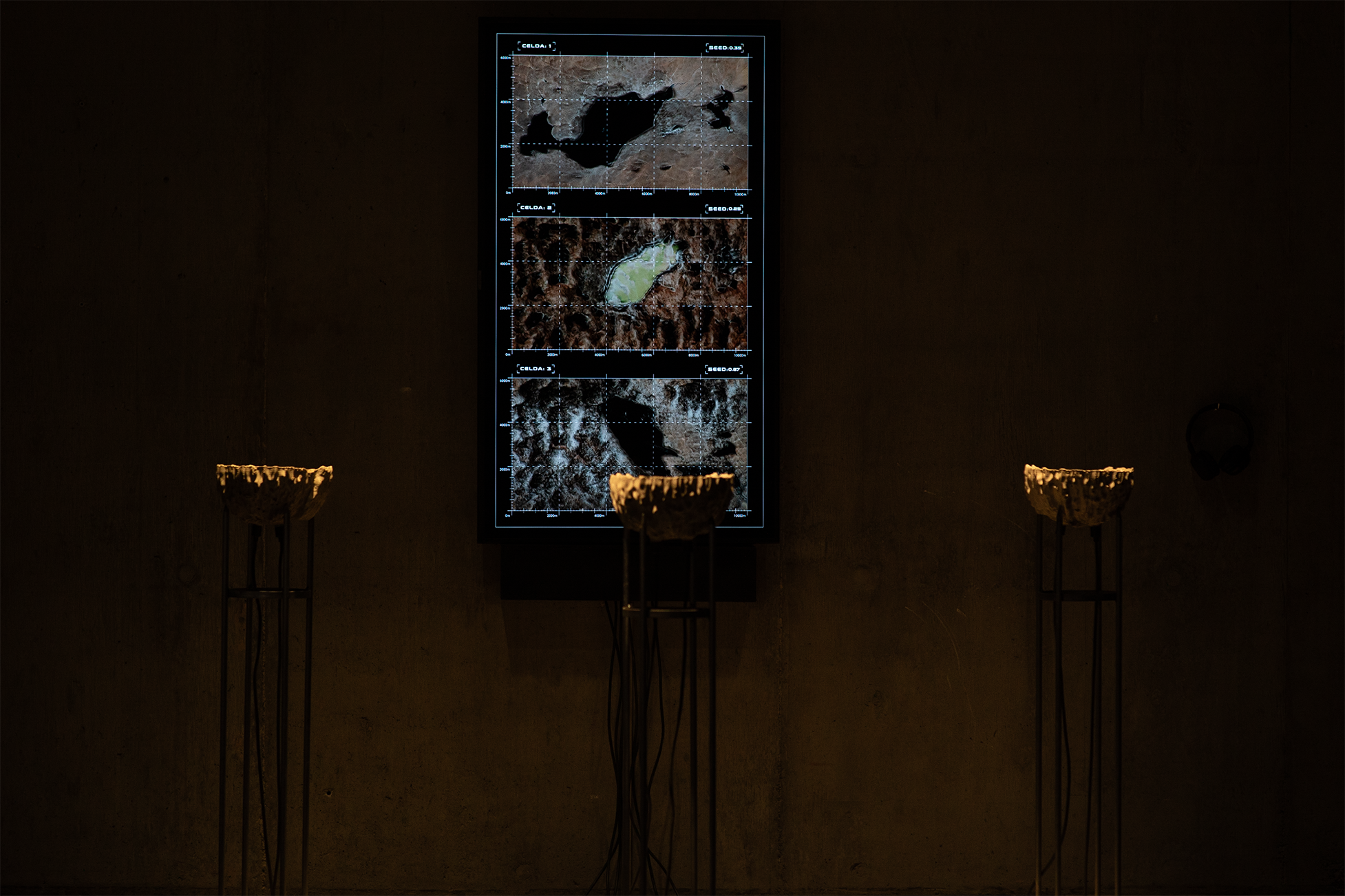
Following the mineral histories and geological materials that make technologies possible, the project uses a collection of more than one thousand satellite images documenting the ecosystemic transformations of the salt flats over the past decades, including extinct lagoons and areas transformed into artificial salt flats. Based on the hydrogeomorphological patterns found in these images, a generative adversarial network (AI system) is trained to produce speculative visualizations of possible landscapes of disappearance and transformation.
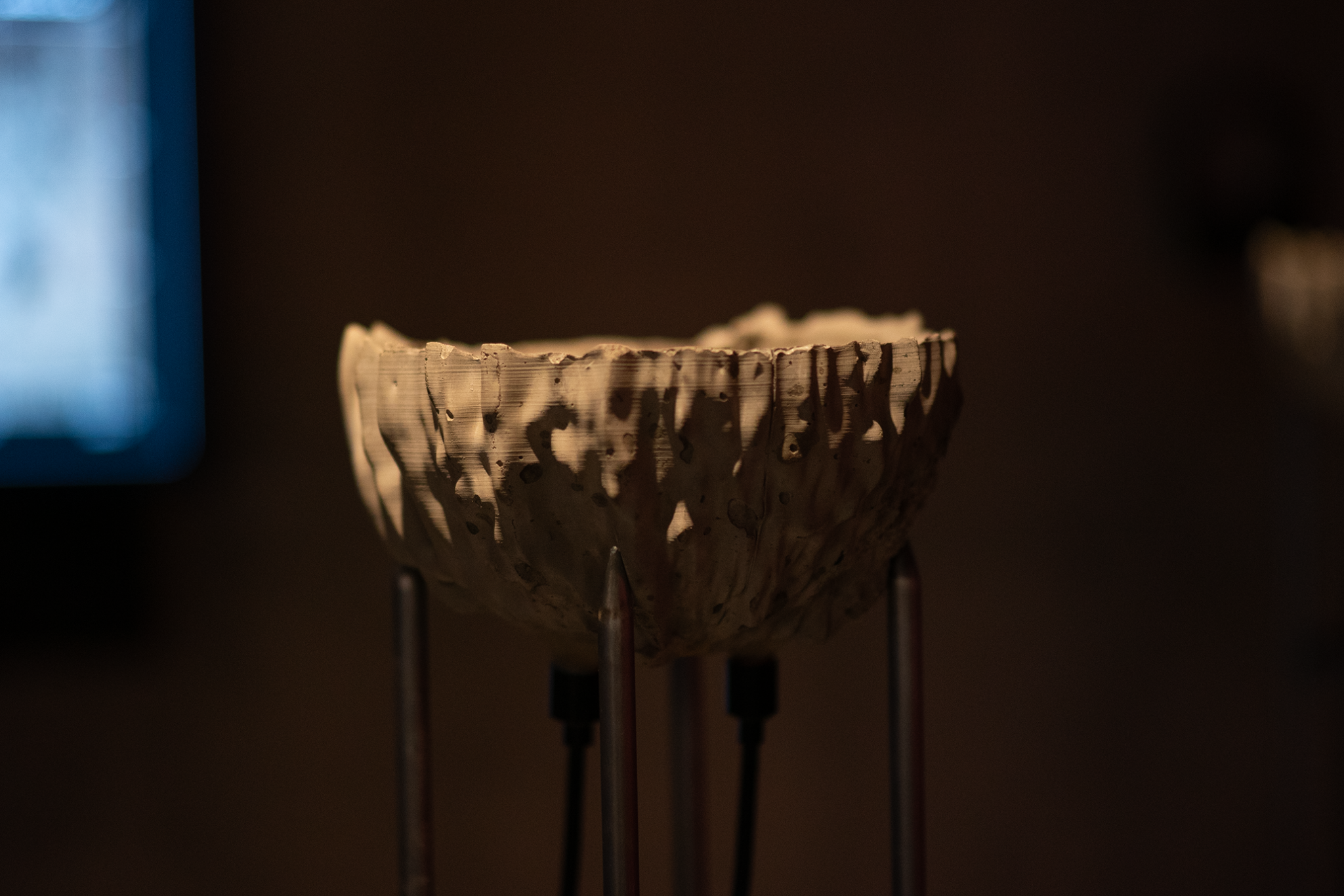
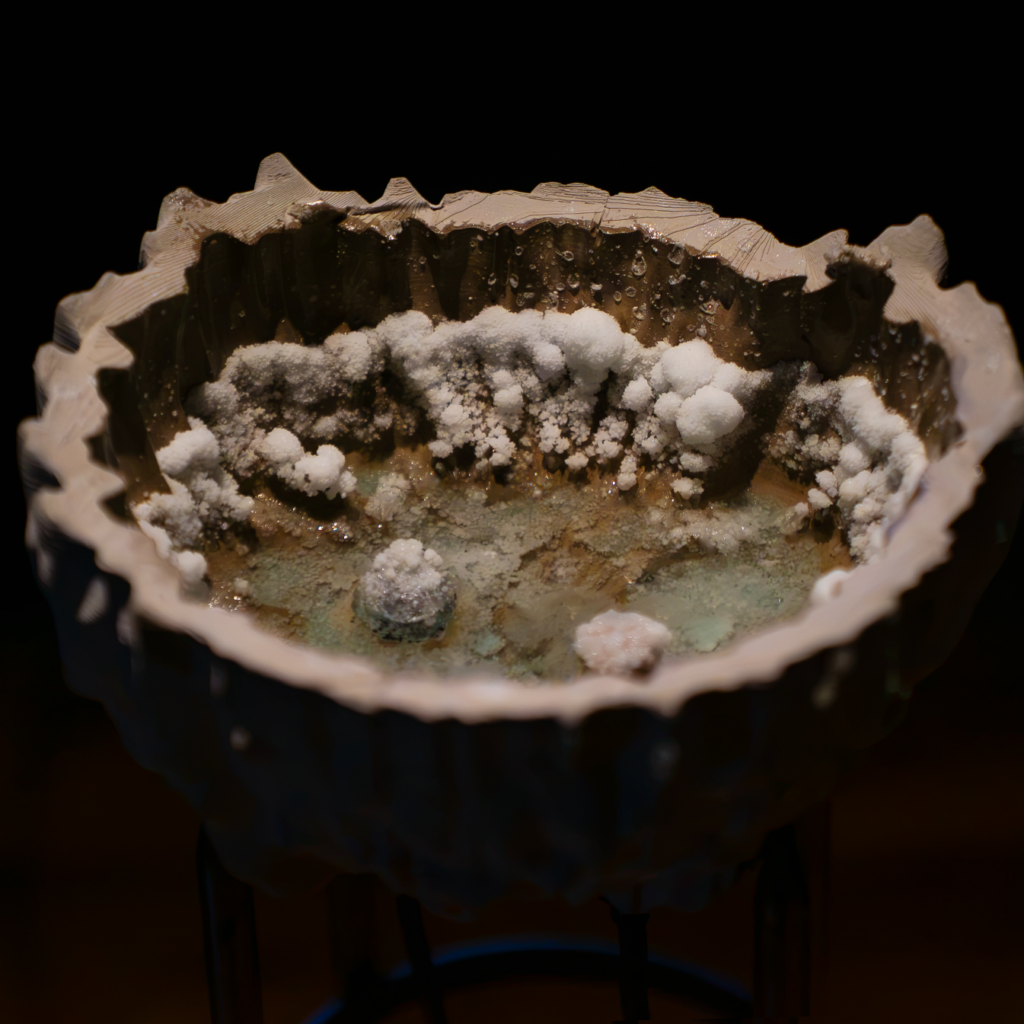
In the installation, the visualization and sonification of these images are controlled by the rhythms of a minimal, slow, and unstable form of energy generated by three sodium-based electrochemical cells. These open cells regulate the operation of the artificial intelligence model while, at the same time, the evaporation process gradually produces the crystallization of salt.
The work is structured around a central paradox: a minimal, slow, and unstable form of energy activates a system associated with acceleration, prediction, and high energy consumption. Confronting the idea of technology without a material basis, the work proposes restoring a body presented as part of its own condition of existence. Salt is no longer treated as an inert resource but as an active materiality that, through its own rhythms, confronts the system and drives it to generate landscapes of its origin. At the same time, this tension between resources, agencies, and algorithms brings to the surface the presence of the mineral bodies hidden behind technological utopias.